Lesson note
1.1 Chemical Equations and 1.1.1 Writing a Chemical Equation
Milk turns sour in summer. An iron tawa rusts in humid air. Grapes ferment. Food is cooked, digested and used during respiration. In each case, the nature and identity of the starting substance change. Whenever a chemical change occurs, a chemical reaction has taken place.
Activity 1.1 Burning magnesium ribbon
Caution: This activity needs the teacher's assistance. Wear suitable eyeglasses. Keep the burning ribbon as far away from your eyes as possible.
- Clean a magnesium ribbon about 3-4 cm long by rubbing it with sandpaper.
- Hold it with a pair of tongs.
- Burn it using a spirit lamp or burner.
- Collect the ash in a watch-glass.
- Record what you observe.
Observation: Magnesium burns with a dazzling white flame and changes into a white powder, magnesium oxide. Cleaning removes the magnesium oxide coating so that the ribbon can burn readily.
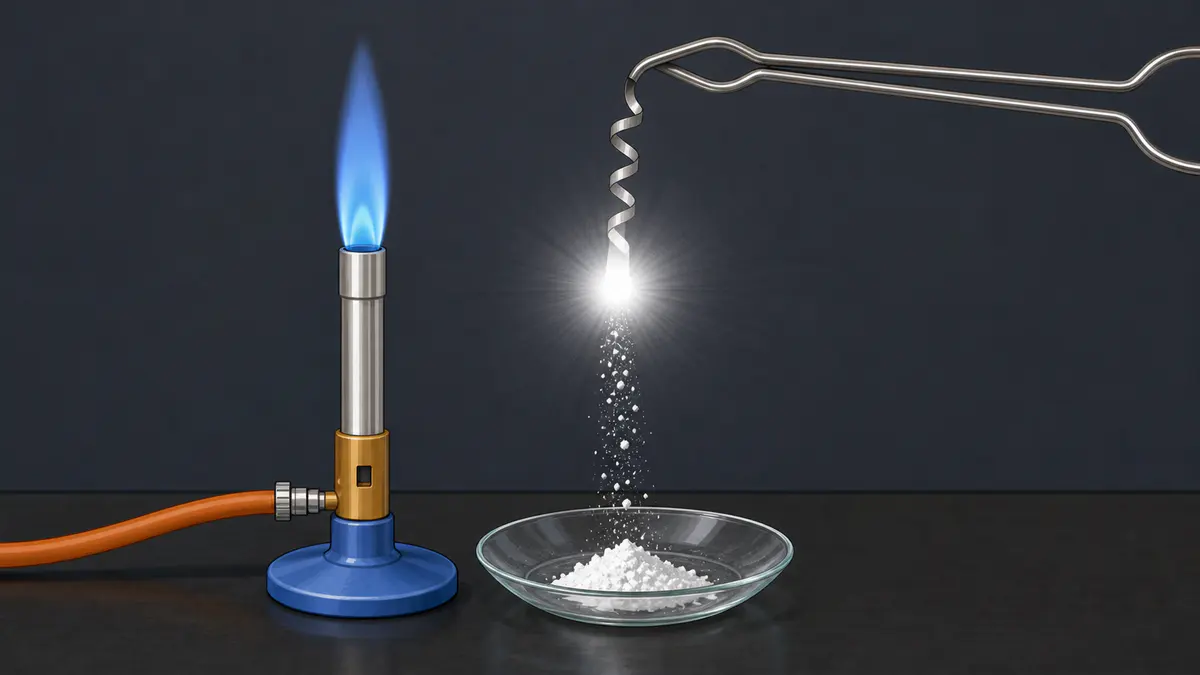
- Bunsen burner
- Magnesium ribbon
- Tongs
- Watch glass
- Magnesium oxide
NCERT Figure 1.1 · Activity 1.1
Burning magnesium ribbon in air
A cleaned magnesium ribbon is held with tongs in a burner flame, and the white ash is collected in a watch glass.
What to observe: Magnesium burns with a dazzling white flame and forms white magnesium oxide.
Figure 1.1 Burning of a magnesium ribbon in air and collection of magnesium oxide in a watch-glass.
Activity 1.2 Lead nitrate and potassium iodide
- Take lead nitrate solution in a test tube.
- Add potassium iodide solution.
- Observe the colour and physical state of the substance formed.
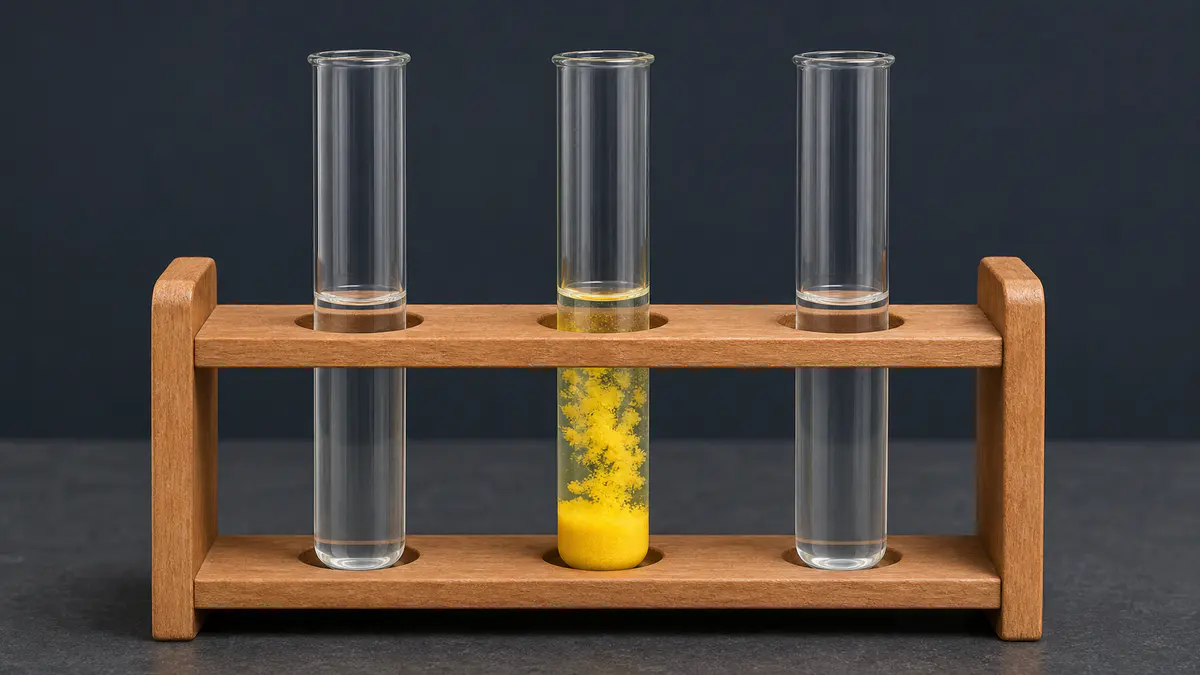
Observation: A yellow insoluble solid, lead iodide, forms. This solid is called a precipitate.

- Lead nitrate solution
- Potassium iodide solution
- Test tube
- Lead iodide precipitate
NCERT Activity 1.2 illustration
Lead nitrate and potassium iodide
Two colourless solutions are mixed in a test tube.
What to observe: A yellow precipitate of lead iodide forms.
Activity 1.3 Zinc and dilute acid
Caution: Handle the acid with care.
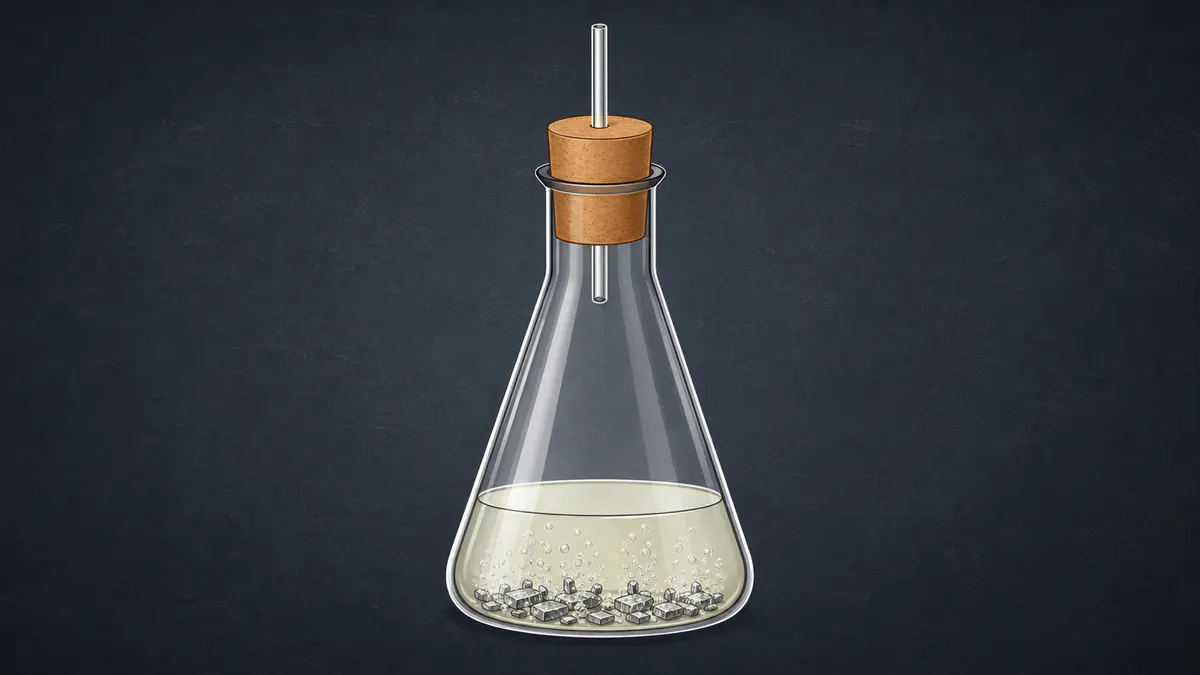
- Take a few zinc granules in a conical flask or test tube.
- Add dilute hydrochloric acid or dilute sulphuric acid.
- Observe what happens around the zinc granules.
- Touch the outside of the container carefully and note any temperature change.
Observation: Hydrogen gas bubbles form and the container becomes warm. The evolution of a gas and rise in temperature show that a chemical reaction has occurred.

- Conical flask
- Cork
- Glass tube
- Zinc granules
- Dilute sulphuric acid
- Hydrogen gas
NCERT Figure 1.2 · Activity 1.3
Zinc with dilute sulphuric acid
Zinc granules react with dilute sulphuric acid in a corked conical flask with a short glass outlet tube.
What to observe: Hydrogen bubbles form and the flask becomes warm.
Figure 1.2 Formation of hydrogen gas by the action of dilute sulphuric acid on zinc.
From Activities 1.1-1.3, these observations help us recognise a chemical reaction:
- change in state
- change in colour
- evolution of a gas
- change in temperature
1.1 Chemical Equations
A long sentence describing a reaction can be shortened to a word-equation:
Magnesium + Oxygen → Magnesium oxide (1.1)
Magnesium and oxygen are the reactants because they undergo chemical change. Magnesium oxide is the product formed by the reaction.
Reactants are written on the left-hand side, products on the right-hand side, and the arrow points towards the products.
1.1.1 Writing a Chemical Equation
Chemical formulae make a word-equation shorter and more useful:
Mg + O₂ → MgO (1.2)
Count the atoms on the two sides. There are two oxygen atoms on the left but only one on the right. Equation (1.2) is therefore an unbalanced or skeletal chemical equation.
Remember: Never change a chemical formula to balance an equation. Changing H₂O into H₂O₂ changes water into a different substance.
Common mistakes
- Calling every visible change a chemical reaction. A chemical reaction forms one or more new substances.
- Writing products on the left and reactants on the right.
- Treating Activity 1.2 as NCERT Figure 1.2. Figure 1.2 belongs to Activity 1.3.
Board tips
- In an observation question, state the visible change and what it indicates.
- Write word-equations as
Reactant + Reactant → Product. - Use correct formulae before attempting to balance an equation.
Quick practice
- Name two observations that show a chemical reaction has occurred.
- Identify the reactants and products in
Zn + H₂SO₄ → ZnSO₄ + H₂. - Explain why
Mg + O₂ → MgOis skeletal.
Practice feedback
Answer check
Try first, then reveal the answer
- Any two of change in state, colour, gas evolution or temperature.
- Reactants: zinc and sulphuric acid. Products: zinc sulphate and hydrogen.
- Oxygen atoms are unequal on the two sides.
One-minute revision
- A chemical reaction forms new substances.
- Reactants are written on the left; products are written on the right.
- Formula equations must use correct chemical formulae.
- A skeletal equation has not yet been balanced.
End-of-lesson comic recap
Comic recap
Quick scene, quick smile, quick memory. Read this once and the idea sticks better.